
An introduction to the emotional wave forms in Human Design
Look at calm water and you might think nothing is happening. But the stillness at the surface sits over real depth, and the light moving across the sand below tells you the water is alive even when it isn’t breaking. This lets us see into the nature of emotional awareness in Human Design: not just the drama of a wave crashing, but a whole depth of feeling moving quietly beneath a surface that may show very little.
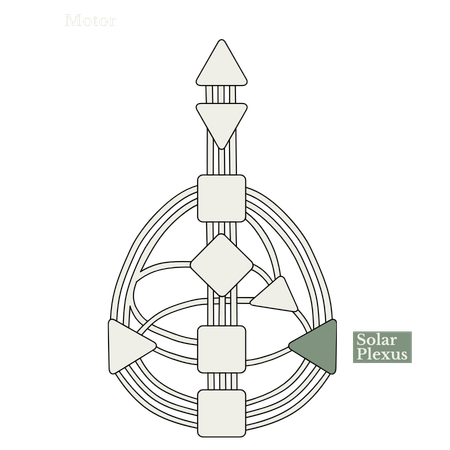
If your Solar Plexus Center is defined — colored in on your chart — this is your Authority, the way clarity comes to you. And it comes as a wave. Not only a mood to be savored or a storm to be weathered, but a movement through time that brings you, at its own pace, the perspectives a decision needs. Across the spectrum of foundational Human Design teaching: for emotional awareness, there is no truth in the now. Clarity arrives over time. You’re told, “wait for emotional clarity.” Not because clarity comes from time, but because of the travel that time allows.
Which raises the question: since the wave takes time, what does the passage of that time actually feel like? Because it doesn’t feel the same for everyone. There are four emotional wave forms, and they don’t differ in how strongly they move you — any of them can level a room. They differ in their period: the cadence of crest and lull across time. How often the water rises. How long the calm runs between. Whether the wave ever rests at all.
That’s the useful way to find yourself here — not by the shape of a diagram, but by recognizing the rhythm of your own experience, or the experience of someone you love.
Tribal — always on it

The shortest period, and no true lull. If this is your wave, you’re rarely not on it — up, down, or on your way to one or the other. It’s a rollercoaster that doesn’t return to the platform, because the wave itself has no flat place to stand.
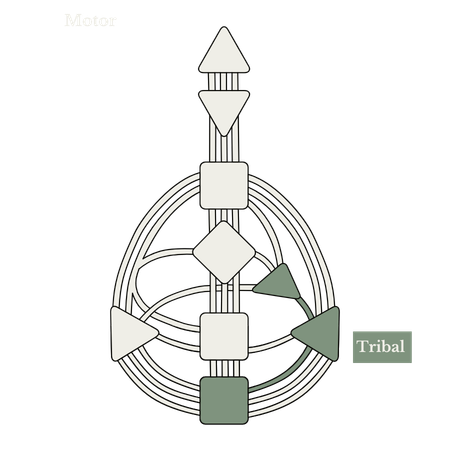
This is the wave of need and belonging, carried by the Channel of Synthesis (19-49) and the Channel of Community (37-40), and it eases through touch. Its people tend to know they’re emotional, because the water is always moving. Read More →
Collective — a climb you don’t feel until you’re high

The longest period — one slow swell. The rise is gradual, and here’s its particular signature: the climb feels good, because it’s the mounting of hope, desire, and vision, and ascending toward something you want is pleasant. So you often don’t notice you’re rising until you’ve reached an altitude where the fall would cost something.
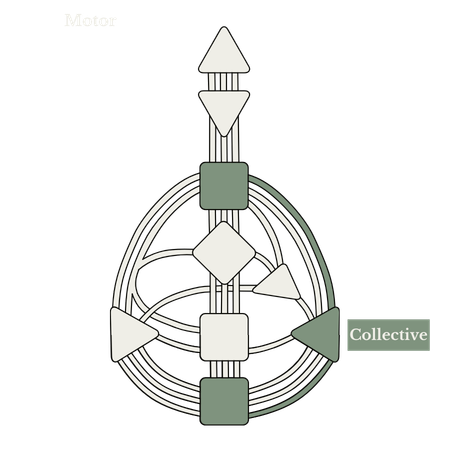
This is the wave of desire, carried by the Channel of Recognition (41-30) and the Channel of Transitoriness (36-35), and it clears through reflection — the long view taken afterward, once you can see the whole shape of the ride. Read more →
Individual — flat, then lightning

A long, quiet interval broken by a sudden, sharp spike. If this is your wave, you may not think of yourself as especially emotional — your baseline is genuinely calm — and once a spike passes, it’s as if it never happened. Which can leave you puzzled that everyone else is still dazed by a storm you’ve already moved on from. Low self-perception, high impact on others, little residue for you.
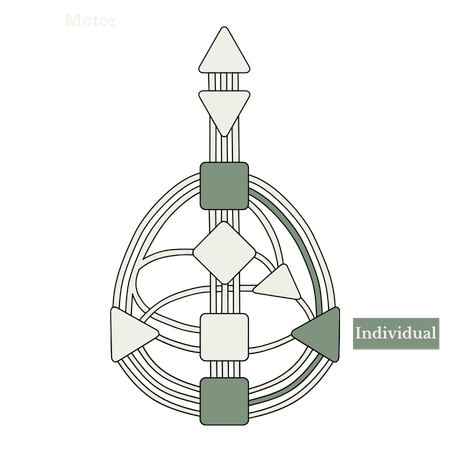
This is the wave of empowerment, carried by the Channel of Openness (22-12) and the Channel of Emoting (39-55), and its medicine is knowing when to step away to the creative muse until the mood shifts on its own. Read More →
Mating — still until someone draws near

And the strangest: a wave with no period of its own. Left alone, it barely moves — which is why people whose only emotional channel is this one often don’t feel much of a wave at all. It waits for the nearness of another to wake it, and then rises slowly and holds.
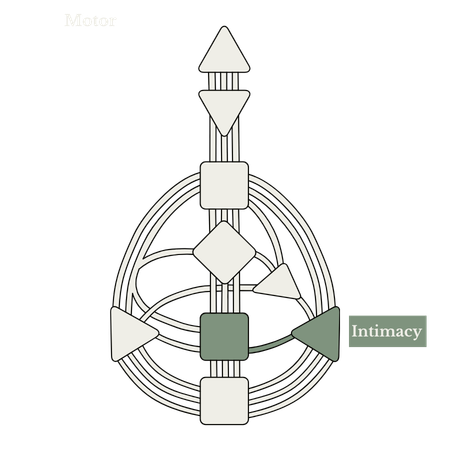
This is the wave of intimacy, carried by the Channel of Mating (59-6), roused by proximity and touch, its deepest clarity found — quietly — in the mirror.
The emotional experience moves from the wave that never lets you off, to the wave that won’t even begin until someone else arrives. Continuous within yourself, at one end; needing another to start, at the other. That’s the range of what a defined Solar Plexus can be. Read More →
What sits beneath all four
Why does the Solar Plexus produce a wave at all? Because it’s the only center that is both a motor and an awareness. The motor generates biochemical signals constantly — the raw chemistry beneath everything we feel. What makes those signals a wave is the center’s other nature: awareness perceiving that moving chemistry over time. The signal is the motor’s; the wave is what awareness makes of it. This is why the channels that define the Emotional Authority shape the wave each person rides — and why, for this authority, there is no truth in a single moment. A moment is one frame of a moving thing.
Foundational Human Design teaching points to a single gate as a kind of wave-traffic controller.
Gate 6 sits at the Solar Plexus and does more than open and close feeling. In the body it’s associated with pH — the chemistry that keeps a boundary between what’s inside a living thing and what’s outside it. It’s named the Gate of Friction, and the old law it carries is that growth cannot happen without friction; the boundary that friction defends is the beginning of life itself. In the emotional system, Gate 6 holds the potential of all three streams of emotional awareness at once — feeling, emoting, and sensitivity — fused together and not yet differentiated into any single one.
That fusion is worth sitting with, because it explains the stillness of the Mating wave better than anything else. The three moving waves each take one stream and give it somewhere to go — a direction, a pull toward expression. Gate 6, in the Mating channel, holds all three together, undifferentiated, with no single one taking the lead. Nothing is pulled in a direction because everything is held at once. That’s not emptiness. It’s fullness in balance — poised, the way a Generator is poised, waiting for something to respond to. The stillest wave turns out to be the most complete, and the least expressed.
Whatever your wave’s pattern, a few things are true of all four, and they’re worth carrying to whichever post you read next.
The wave is not a constraint placed on you. It is you. For an emotionally defined person, this movement through time is simply the form clarity takes — not an obstacle between you and clarity, but the shape clarity arrives in.
Every point on the wave holds a perspective. You don’t wait through the wave to reach clarity at the end; you gather what each point — crest, trough, and the long stretches between — shows you, and clarity emerges from the collection. The waiting isn’t dead time. It’s the gathering.
And clarity, when it comes, reveals only enough to move you into the next wave. Not a final arrival. The next step. Each wave’s clarity is what lets the next one begin — which is why this is a way of living, not a problem to solve once.
That’s the whole of it: four periods, one depth, a lifetime of learning to trust the water.
Each wave has its own shape, and its own kind of clarity: Need · Desire · Empowerment · Intimacy. And all of it rests on Emotional Authority, the doorway these waves move through.
Read about the Tribal Wave, Need →
Read about the Collective Wave, Desire →